
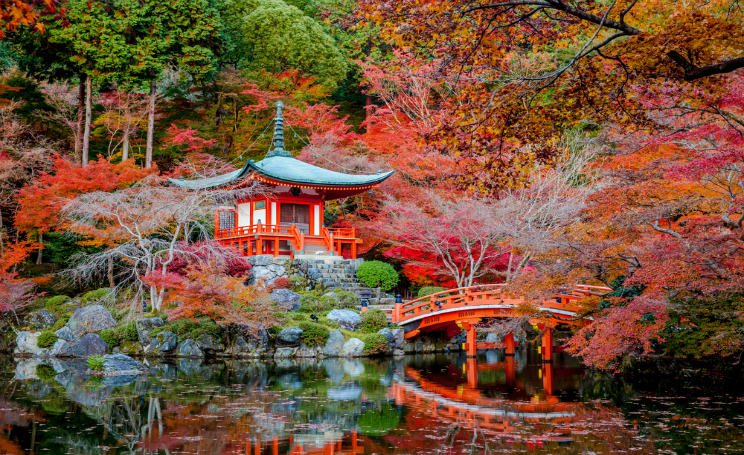
In an increasingly fast-paced and noisy world, the need to create a space of silence has become a necessity.
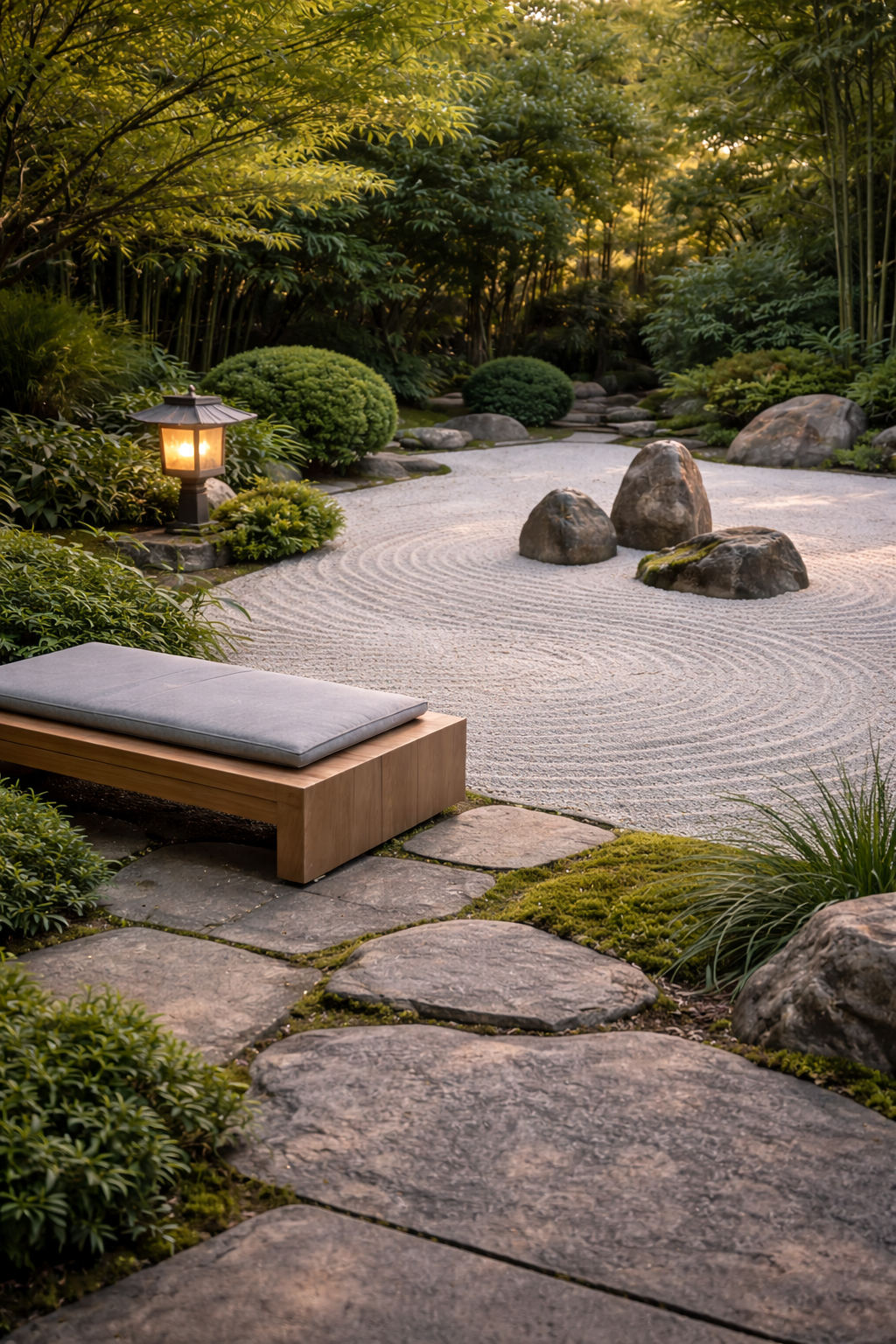
The Zen garden, inspired by the Japanese tradition of karesansui (“dry nature”), is not just a decorative element: it is a symbolic place where sand, rocks, light, and vegetation converse to generate balance.
It is not a garden to walk through.
It is a garden to contemplate.
And now more than ever, its minimalism complements contemporary design perfectly.
What is really a Zen Garden
The Zen garden originated in the monasteries of Zen Buddhism as an abstract representation of the natural landscape.
Waves drawn in the sand evoke the sea.
Rocks become mountains.
Emptiness becomes breath.
The basic principle is simplicity: every element has meaning, nothing is random.
Essentials of a Zen Garden
Sand and Gravel
They represent water. They should be clear to reflect light and allow the creation of symbolic waves with the rake.
The repetitive gesture of drawing lines in the sand is an integral part of the meditative experience.
Rocks
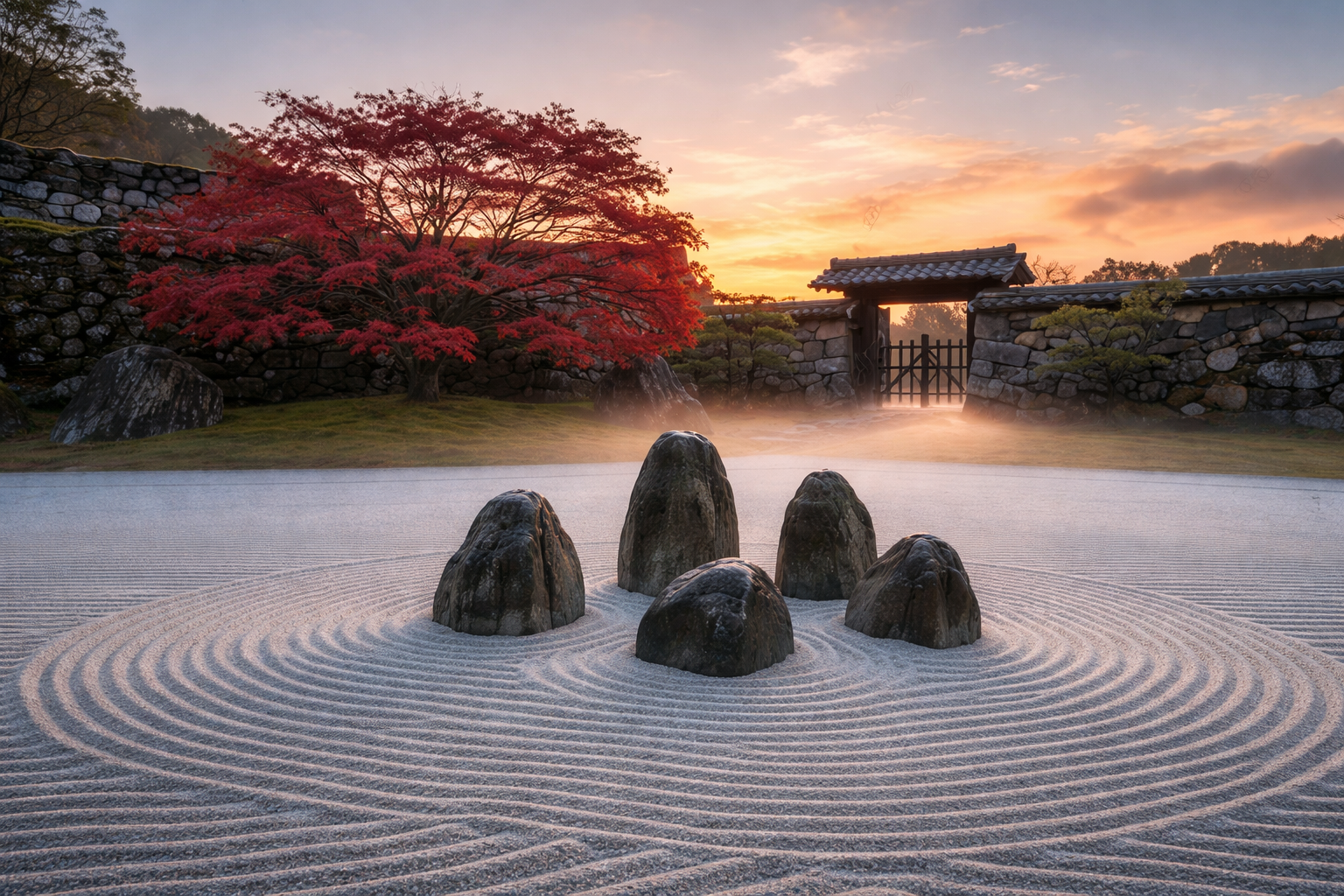
Symbol of stability and inner strength.
They must be:
- Poorly worked
- Arranged in odd numbers
- Insert naturally
The composition should be asymmetrical, never rigid.
Plants
In the Zen garden, vegetation is not decorative but symbolic.
The most commonly used species are:
- Bamboo
- Japanese maple
- Juniper
- Moss
- Bonsai
Better a few well-maintained plants than many messy ones.
The Contemplation Point: Essential Furniture
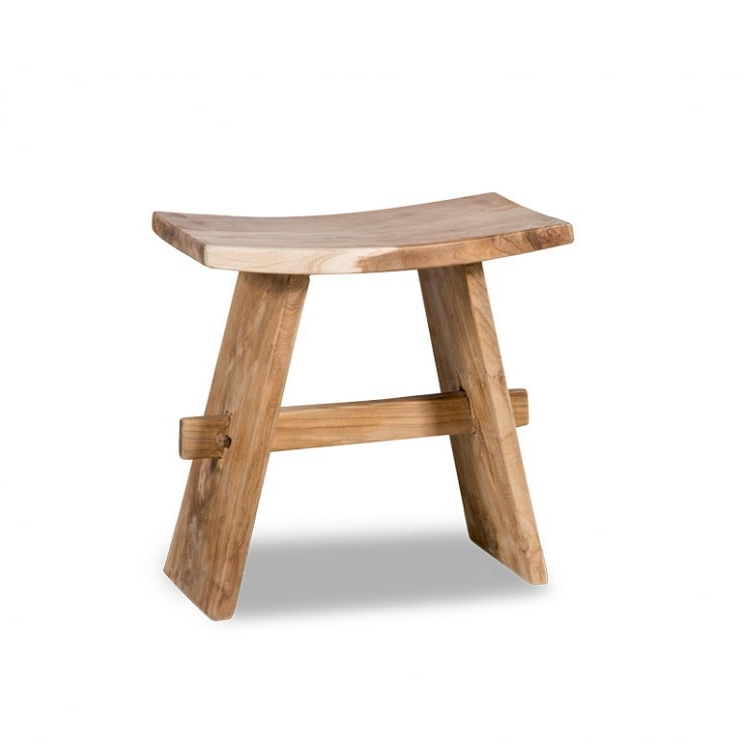
A Zen garden is not complete without a space dedicated to rest and reflection.
A natural wood seat, a minimal bench or a small table can become the contemplative centerpiece of the space.
Lighting: Harmony After Sunset
Light in a Zen garden should not dominate the space, but accompany it.
It is preferable to choose:
- Warm lighting
- Discrete step markers
- Lamps with diffused light
- Minimal suspension
Well-designed light guides the eye, creates depth and allows the space to be experienced even in the evening hours, transforming it into a meditative environment.
Zen Garden in Terrace or Small Spaces
You don’t need a big garden to create harmony.
Even an urban terrace can become a zen space if designed carefully.
Enough:
- an area with sand or gravel
- few rocks
- an evergreen plant
- a soft point of light
- a minimalist seat
The important thing is to maintain balance between solids and voids, avoiding decorative excesses.
Zen Garden and Contemporary Design
Today the Zen garden dialogues perfectly with:
- Minimal architecture
- Modern outdoors
- Open living spaces
- Urban terraces
Natural materials, clean lines and studied lighting create continuity between inside and outside.
A consciously designed garden becomes a harmonious extension of the home, a space that is not only aesthetic but deeply functional for daily well-being.
Conclusion
Zen garden is not a fad.
It is a choice of balance.
It is an invitation to slow down.
To observe.
To breathe.
Whether it is a large green space or a small outdoor corner, what matters is consistency between natural elements, essential furnishings and harmonious light.
With just a few carefully chosen elements, you can transform any space into a contemporary oasis of peace.


