CERAMICS: INTRODUCTION
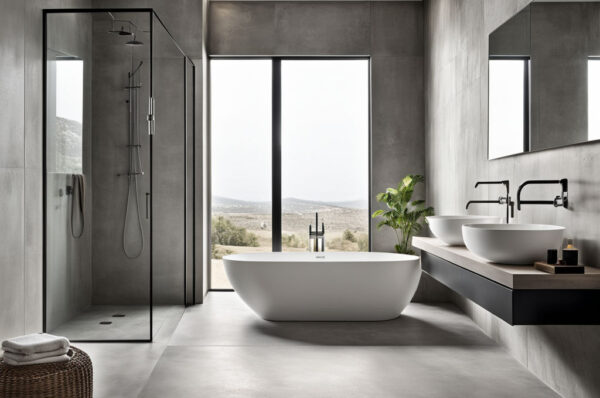
Ceramic is a natural material, widely present in the Italian tradition. Not just kitchen utensils or pots; furnishing with ceramic is possible and also very widespread.
Moreover, pottery making is known to have ancient roots and is based on simple natural raw materials.
That said, the result of ongoing research carried out in the field is a modern, high-performance material that responds ‘present’ to the needs of an ever-changing market where beauty is required to be coupled with qualities such as efficiency and safety.
Then there is the issue from practicality: the fact that ceramic coatings lend themselves to being easily fitted, and in any condition.
Furthermore, ceramics are among the healthiest and most hygienic building materials because hypoallergenic and free of toxic substances of organic nature.
Finally, all this without forgetting the aesthetics and almost infinite expressive potential of ceramic coatings
ORIGINS AND FUNCTION
Pottery (from ancient Greek κέραμος, ‘kéramos,’ which means “clay,” “potter’s earth”) is an inorganic, nonmetallic material that is very ductile in its natural state and rigid after firing.
Pottery has a very ancient history that begins with prehistoric peoples reaching to the present.
It is a clay compound inorganic, which can be cold molded and which, when baked, retains its shape.
In fact, a variety of items are produced with ceramics, such as tableware, decorative items, building materials (bricks, tiles and roof tiles), wall and floor coverings for homes.
Specific ceramics also find use in coatings with high heat resistance because of their high melting point.
The color of the ceramic material varies depending on the chromophore oxides contained in the clays (iron oxides, yellow, orange, red to brown; titanium oxides, white to yellow). It can be glazed and decorated.
In addition, ceramics is usually made up of different materials: clays, feldspars, (sodium, potassium or both), silica sand, iron oxides, alumina and quartz.
Such an articulated composition results in the presence of flattened molecular structures called phyllosilicates.
The shape of these, in the presence of water, gives the clay a certain plasticity and makes it easier and more profitable to work with. An artifact made of terracotta or clay is called a fittile.
Finally, this is precisely why ceramics proves to be a versatile material suitable for a variety of uses, especially when it comes to furniture.
TYPES
Ceramics can be classified first of all on the basis of the nature of the pasta.
Compact paste ceramics are characterized by low porosity and high resistance to scratching and impact. It also possesses excellent waterproof qualities. Porcelain and stoneware (widely used for floors) belong to this category.
Porous paste ceramics, on the other hand, are characterized by a soft, absorbent, ductile body. They have low scratch resistance. Think of earthenware, majolica, and terracotta.
In addition, given that ceramics are produced through a mixture containing clay, we can distinguish them according to whether the production is done through artisanal or industrial process.
CRAFT PRODUCTION
When you choose production craftsmanship:
- Primarily, selection and refining (seasoning);
- washing (to disperse soluble salts);
- Purification and molding (through molds).
- Finally, drying and cooking.
The latter is used to remove residual salts and achieve vitrification of the tile. Then the tile is glazed and decorated. There is also the possibility of coating it with glass-like materials and glazes.
INDUSTRIAL PRODUCTION
On the other hand, when it comes to industrial production, the processing is done respecting these steps:
- First of all, single firing;
- double-baking;
- pressing;
- extrusion and casting;
- In conclusion, glazing and annealing.

FURNISHING
FORMATS
Before choosing in which area of the house to place the pleasant warmth of ceramics is that good that you choose the right format.
Tiles, square or rectangular slabs? The shape of the ceramic should be carefully studied so that it looks in harmony with the environment.
CERAMIC TILE FORMAT, RECTANGULAR OR SQUARE
The format rectangular or square (usually 60×60), is ideal for convenience and durability.
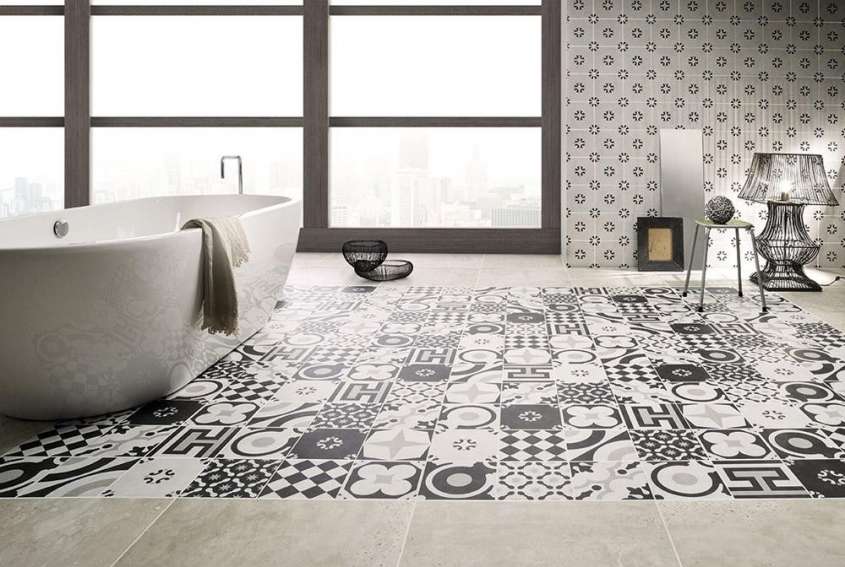
For floors or walls in rooms such as the kitchen, the ceramic tiles are easy to clean and also beautiful to look at thanks to different patterns, colors and decorations.
This category also includes hexagonal tiles, one of the design trends of 2020.
CERAMIC SLABS, THE LARGE FORMAT
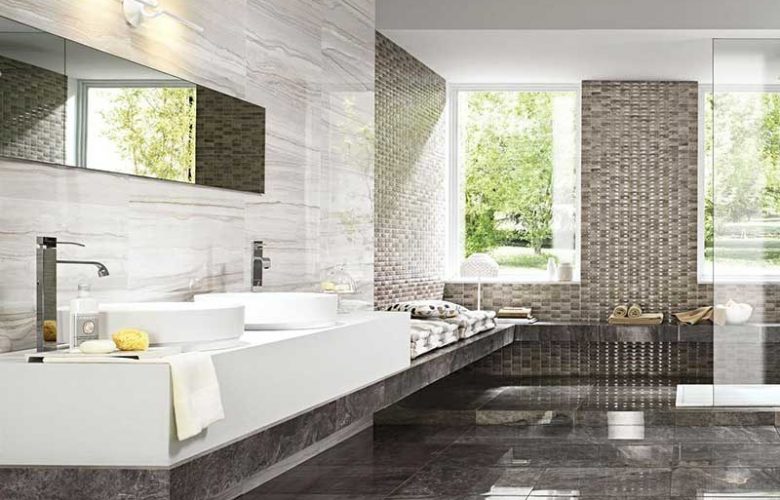
Walls, outdoor furniture, floors; when we talk about decorating with ceramics, large formats are the latest design inspirations.
Large sizes are ceramic slabs ranging from a square shape of 80×80 centimeters to a maximum size of about 3 meters .
Durable, lightweight, flexible and ductile, in fact, they are an impactful and highly customizable furniture solution.
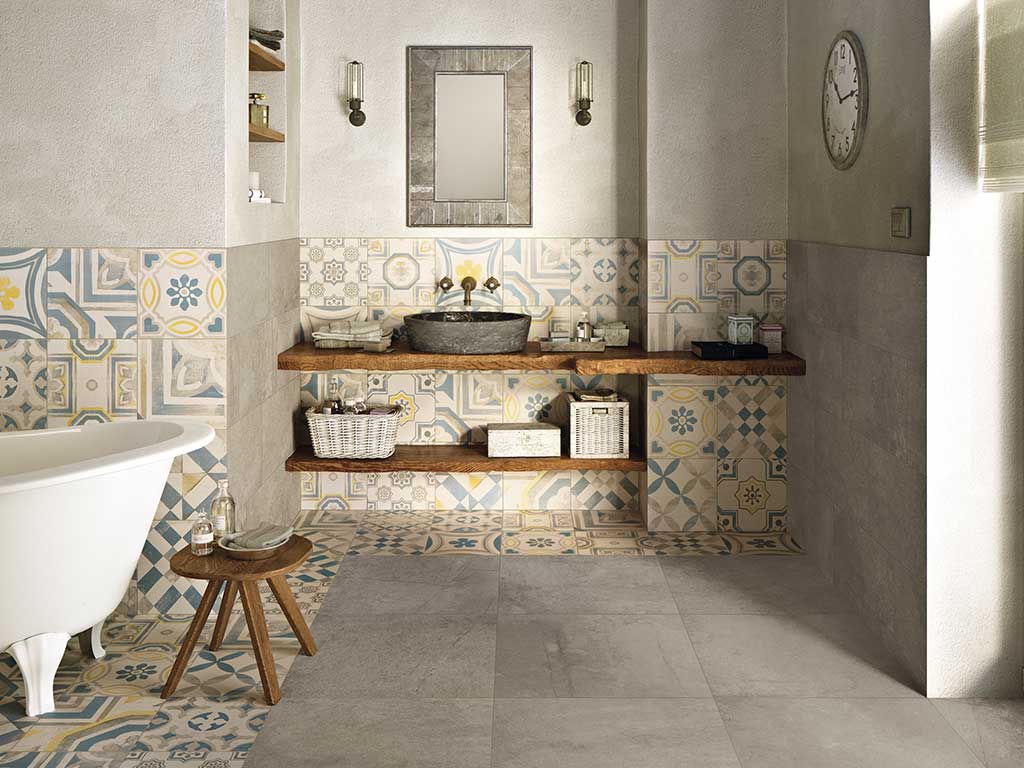
Finally, wider shapes prove to be the perfect ally to breathe new life into a bathroom that needs remodeling or a laundry room that you want to transform into a small modern space.
ADVANTAGES
But why should ceramic tile be preferred over other alternatives?
HARDNESS
First of all, because of its hardness, which makes it very resistant to breakage, able to withstand high loads without deforming, even when it suffers shocks, and because of its inability to react with other substances, which makes it, in fact, insoluble and unalterable in contact with water and most chemicals.
DURABILITY
In addition, ceramic tile has two among the indispensable requirements for a finishing material.
First of all, the durability, guaranteed by the strength of the tile-substrate bond, which is expressed in its ability to resist stress from the external environment.
In addition, the second requirement concerns functionality, related to its inertness chemistry that makes it less susceptible to deterioration risks, more resistant to dirt and also easier to clean.
AESTHETIC CRITERION
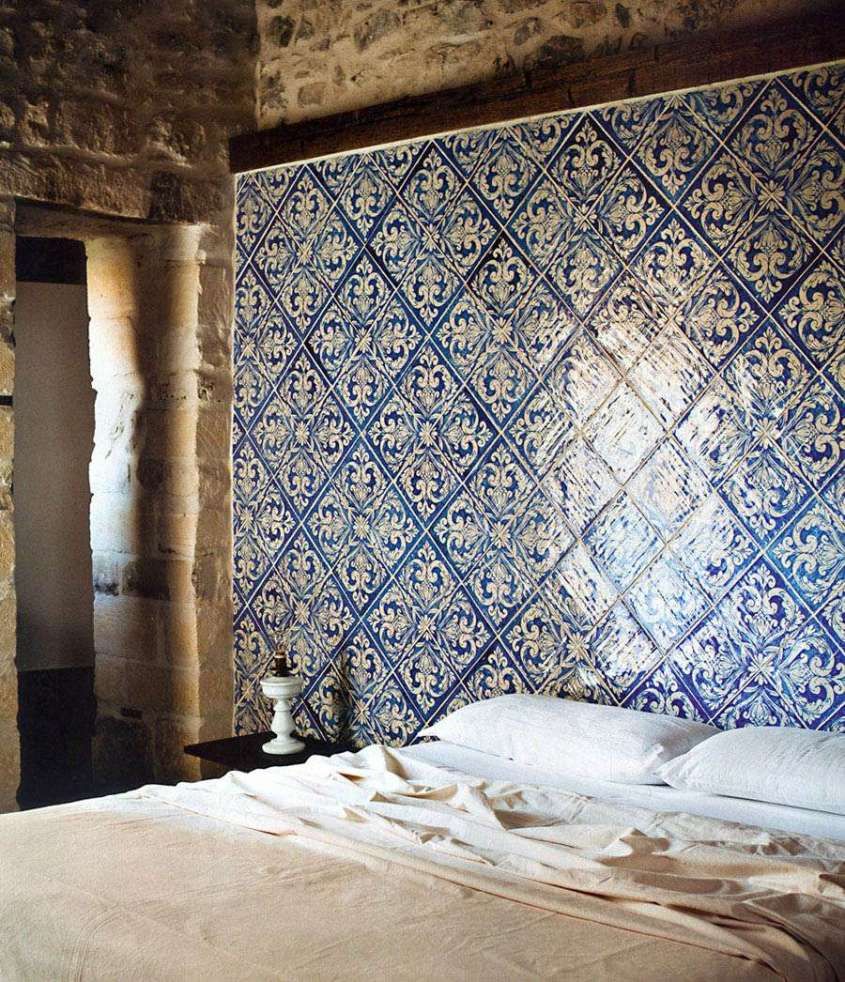
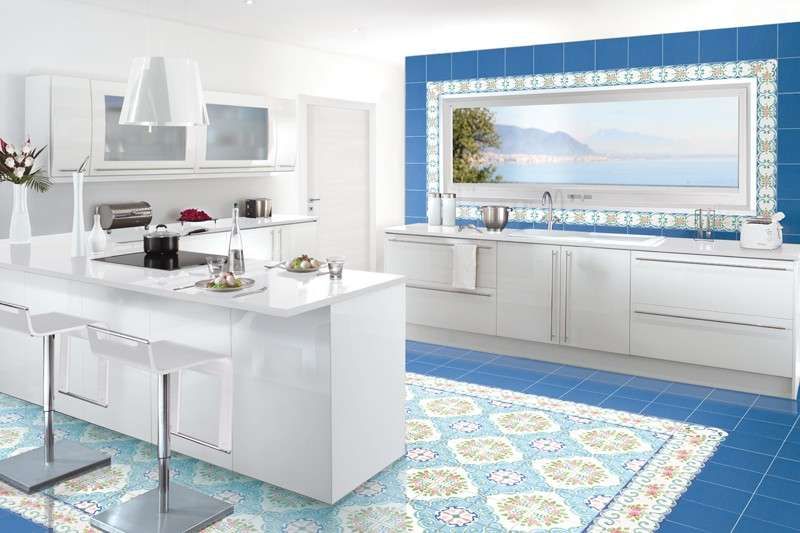
Last but not least is the aesthetic criterion: choosing the ceramic tile, in fact, allows you to range from a wide range of colors and decors.
Moreover, thanks to the use of glazes the color variations available are very numerous and, in fact even in those without a coating, which, being related to the substrate present a restricted range of color shades.
Decoration is also connected to the presence of enamels, which thanks to modern processing techniques, make any kind of ornament possible.
Among unglazed tiles for example, porcelain stoneware allows the realization of interesting visual effects: screen printing, decorated inserts, satin patterns.
Finally, wide is even the choice of formats; the most popular ones are square tiles but polygonal and complex profile (Moorish, Provençal) tiles are also available.
EASE OF PROCESSING
Combined with the characteristics of lightness, the easy installation of the white-body ceramic coating makes it ideal for wall use.
In fact, cuts and holes can be made easily and quickly, reducing installation time and costs.
EASE OF MAINTENANCE
Furthermore, a great advantage of ceramic coatings is thatwith minimal effort they maintain their appearance unaltered.
In fact, starting with cleaning operations, which in most cases require only a cloth dampened with warm water and a regular detergent.
They are also resistant to water, chemicals and stains. Porcelain tile, then, thanks to its special processing, is impervious to all kinds of liquids-oil, wine, coffee in the kitchen, as well as perfumes, glazes and creams in the bathroom-and resistant to even the most aggressive chemical cleaners.
HEALTH AND HYGIENE
The white body coating and porcelain stoneware are among the healthiest construction materials that can be used in construction as they are completely free of toxic substances of an organic nature, such as volatile compounds (VOC), formaldehyde, PVC and other derivatives of Petroleum.
In addition, their compact, nonporous and absolutely impermeable surfaces are not suitable for trapping mites, bacteria, fungi, mold and other irritants that cause asthma and allergies.
SAFETY
In addition to health benefits, there are other parameters that make ceramic surfaces the smartest choice under any condition of use.
Inert when subjected to high temperatures, they also withstand fire: they are nonflammable, and in the event of a fire they facilitate extinguishing operations because they reduce the spread of flames.
In fact, from fire to the lowest temperatures, porcelain stoneware slabs continue to provide maximum safety.
The very low percentage of water absorption (0.5 percent) makes sure that they resist frost without the risk of cracks, fissures or detachment of material.
This makes them the ideal solution even in high mountains, in places such as ski resorts, or in the most extreme latitudes.
LOW ENVIRONMENTAL IMPACT
Finally, ceramic is a natural and nature-friendly material, which ranks among the most ecological options available among the materials for surface coating.
In fact, it respects the environment at all stages of the production process, from the extraction of raw materials in selected quarries to industrial production, which is carried out according to energy- and water-efficient criteria.
Not to be overlooked is disposal, which is completely recyclable.
LEAVE A COMMENT
If you liked the article please feel free to leave a comment with your thoughts about it!
Finally, if you need personalised advice or to resolve any doubts regarding the inclusion of ceramics in your furnishings, send an email to [email protected]! Visit our online portal CasaOmnia.it! Discover our ceramic products!