
Feng Shui is an ancient Eastern discipline that aims to create balance between people and the environment through the conscious arrangement of spaces.
Literally meaning “wind and water,” natural elements that shape the landscape and influence life energy, called Qi. Applied to interior design, Feng Shui becomes a method for designing harmonious, bright and functional environments where shapes, colors and materials dialogue with each other.
Today, many principles of Feng Shui find application in contemporary furniture, especially in minimal spaces and designs that focus on visual balance and daily well-being.
The Fundamental Principles of Feng Shui
At the basis of Feng Shui we find:
- balance between Yin and Yang
- free movement of energy
- Harmony among the five elements: water, wood, fire, earth and metal
In practical terms, this translates into:
✔ orderly environments
✔ flowing paths
✔ well-distributed light
✔ balanced proportions
A harmonious space is not necessarily empty, but well balanced between solids and voids.
Feng Shui in Living: Balance and Energy Center
The living room is the place of relationship, sharing and social energy.
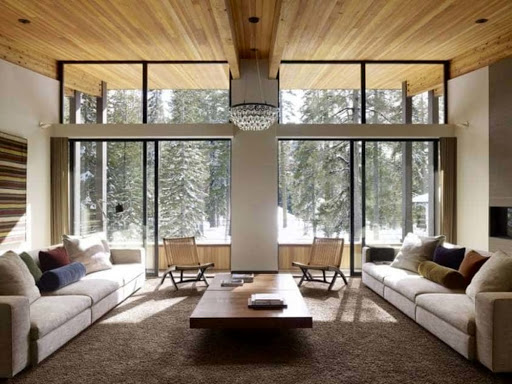
According to Feng Shui, it is important to create a clear central area, around which the arrangement of furniture is developed. In this context, the coffee table becomes a key element: not only a functional support, but the point of visual and symbolic balance between people.
A well-proportioned coffee table consistent with the style of the room helps define the space without weighing it down, maintaining fluidity in movement and perspective.
Light also plays a crucial role. Light pendant lamps or indirect spotlights help create a balanced atmosphere, avoiding aggressive shadows or overly direct lighting. Lighting should accompany the space, not dominate it.
In transitional rooms, small soft-light step markers can improve the perception of continuity between areas of the house, promoting a feeling of stability and harmony.

Feng Shui in the Bedroom: Protection and Stability
The bedroom represents the place of rest and regeneration.
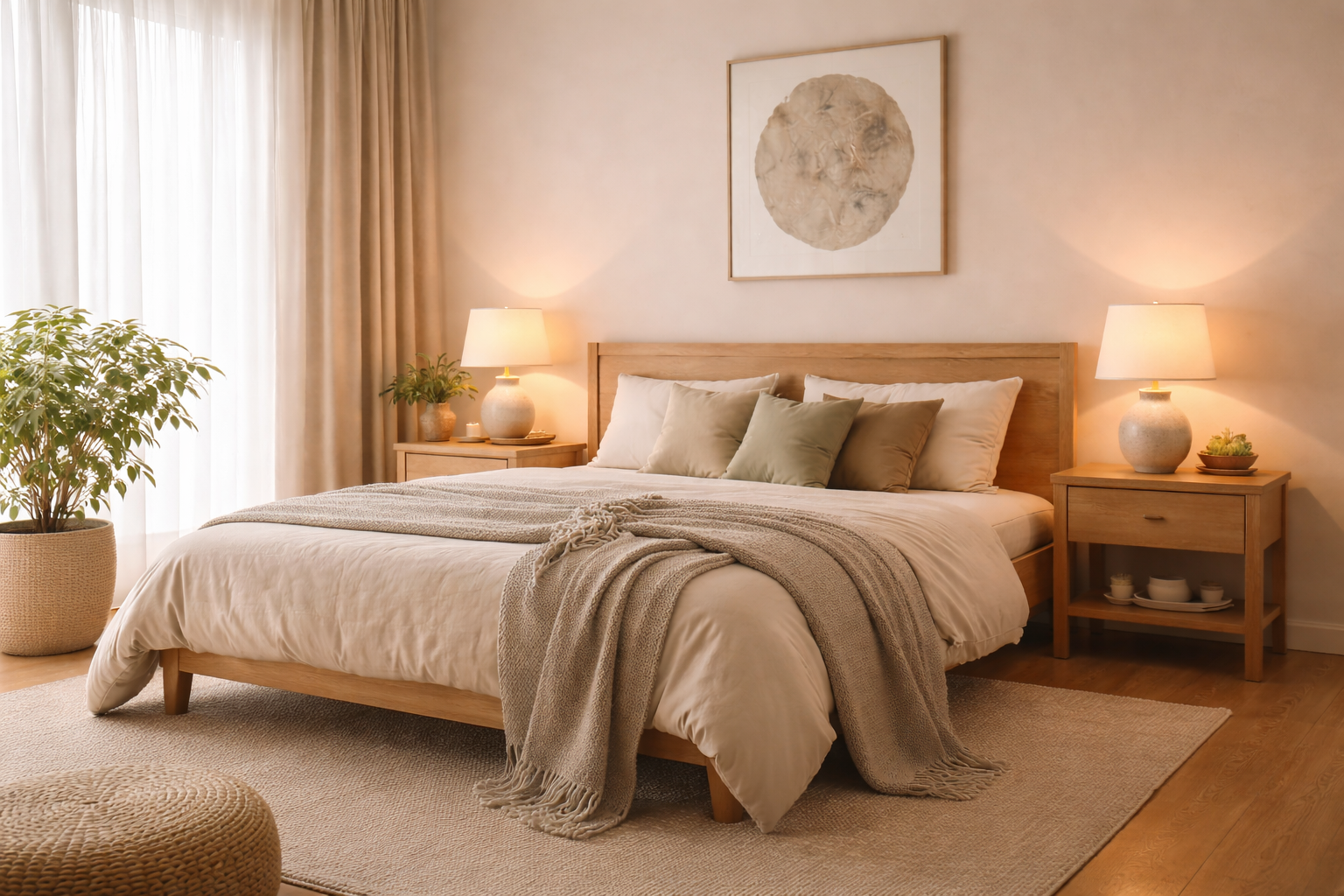
The bed should have a full wall behind it, a symbol of protection, and not be placed directly in axis with the door. The arrangement should convey security and tranquility.
Lighting is key: it is best to choose table lamps with warm, diffused light that can create a cozy, relaxing atmosphere.
Neutral colors, natural fabrics and simple lines help maintain balance between visual comfort and emotional serenity.
Feng Shui in the Kitchen: Energy and Transformation
The kitchen is the place of transformation and nourishment, associated with the element of fire but in constant dialogue with water, metal, wood and earth.
It is important to avoid direct conflicts between opposing elements (such as a sink and cooktop that are too close together) and to keep surfaces neat and clean.
Good lighting, possibly distributed on several levels, promotes concentration and well-being. Again, light should not be intrusive but balanced.
Feng Shui in the Bathroom: EqFeng Shui in the Bathroom: Balancing the Water Element
The bathroom is a delicate space because it is linked to the element of water.
To harmonize it is advisable:
- maintain order and cleanliness
- choose natural or neutral colors
- avoid excessive visual fragmentation
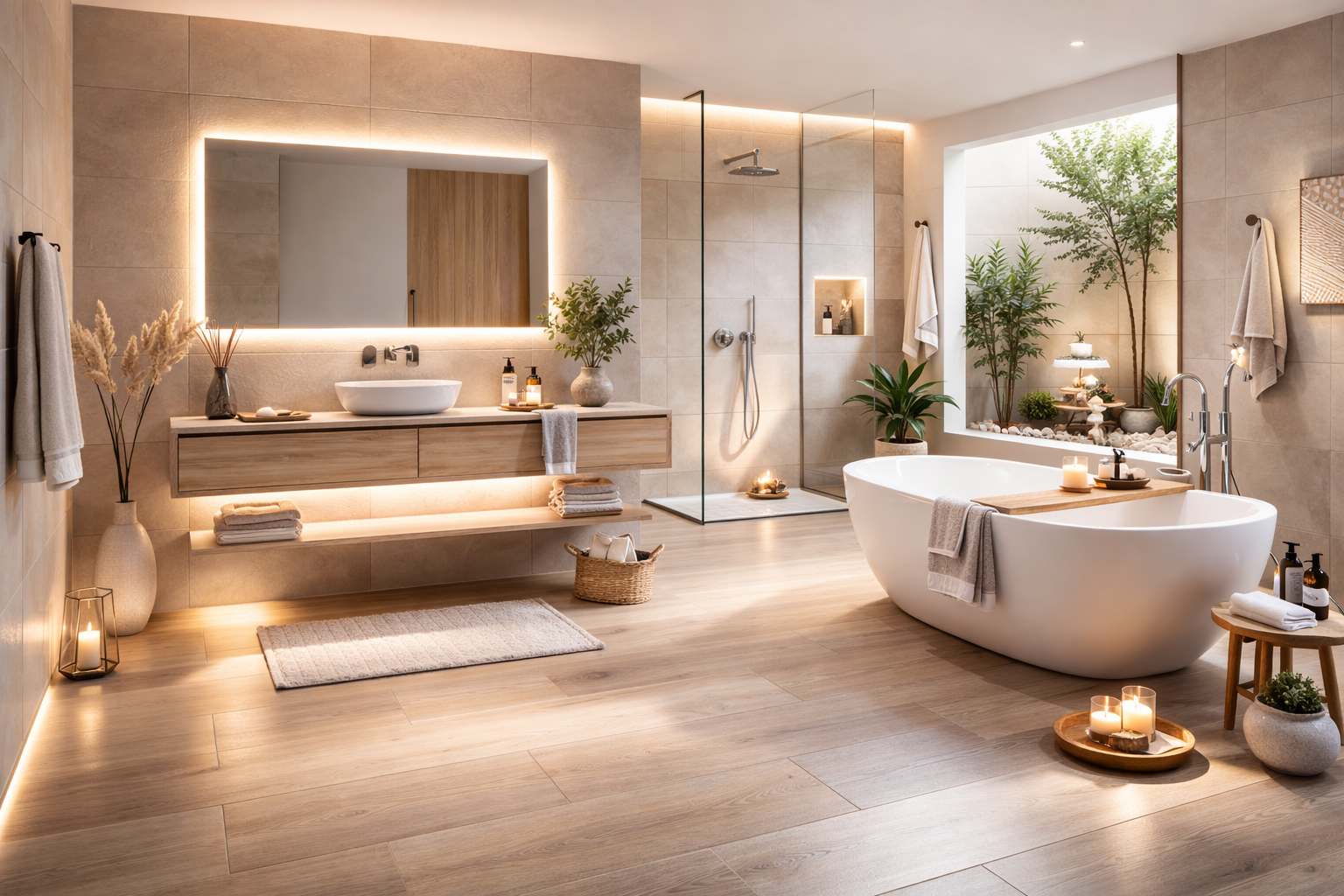
A well-sized mirror expands the perception of space and improves light distribution, contributing to a feeling of balance.
Suspended furniture and light lines also help maintain visual fluidity, making the environment more airy and consistent with the principles of harmony.
In this context, a freestanding bathtub can become the centerpiece of the environment: its soft, enveloping forms evoke the fluidity of water and transform the bathroom into a space dedicated to relaxation and regeneration. Placed carefully, avoiding excessive clutter and maintaining balanced proportions, the tub helps create a stable and harmonious visual center.
Combined with natural materials, soft lighting and minimal details, the freestanding tub reinforces the idea of a bathroom designed as a place of well-being, where aesthetics and functionality coexist in balance.
The Role of Colors in Feng Shui
Colors deeply influence the energetic perception of an environment.
Green → growth, regeneration, balance
Blue → calm, concentration
Red → energy, vitality (to be used in moderation)
Yellow → light and optimism
White → clarity and order
Black → depth and stability, if dosed correctly
Color choice should always consider exposure, natural light and room function.
Natural Materials and Harmony
Feng Shui favors authentic materials:
- wood
- stone
- natural metals
- fabrics made of natural fibers
These elements create a visual and sensory connection with nature, reinforcing the feeling of stability and well-being.
Feng Shui and Contemporary Interior Design
Many principles of Feng Shui coincide with modern trends:
- minimalism
- light furnishings
- balance between volumes
- studied lighting
- centrality of space
It is not necessary to rigidly apply every traditional rule. The real goal is to design environments that promote balance, proportion, and daily well-being.
Conclusions
Furnishing according to Feng Shui means designing with awareness, giving importance to light, layout, proportions and materials.
Every room in the home-from the living room to the bathroom-can become a harmonious space if organized with balance and attention to detail.
Whether it’s choosing a coffee table to define the center of the living room, a lighting system capable of enhancing the space, or a mirror that amplifies natural light, the goal remains the same: to create an environment where you feel good every day.do the principles of Feng-shui, feel free to leave a comment at the end of the article!


