

DOMOTICA: INTRODUZIONE
Including home automation in a renovation is an excellent investment both in terms of convenience and saving on our home expenses. In this simple guide we will look at what home automation means, what types of systems exist, and what is meant when we talk about home assistants.
DEFINITION
The word home automation comes from the union of the Latin domus and computer science. Thus, the meaning of domotics refers to the discipline that designs technological applications designed to improve domestic habitability.
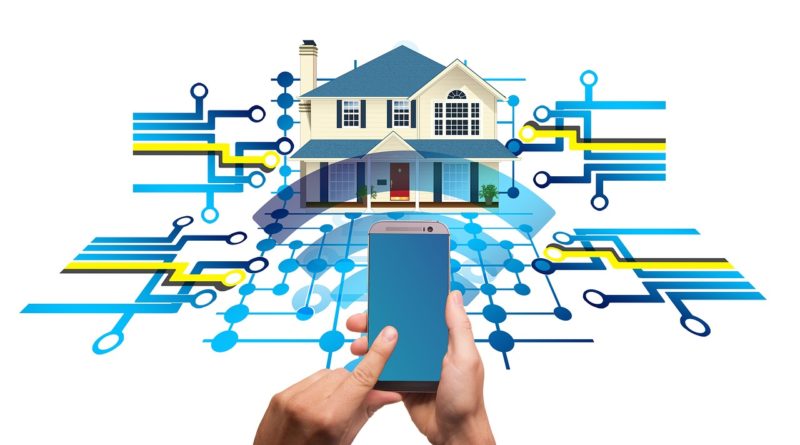
Also known as Home Automation, home automation is thus the set of devices, technologies and software designed to automate home processes and make a home “smart.” It is no coincidence that there is increasing talk of a smart home. This is understood as an environment in which there are automation and control technologies that allow those who live there to adjust lights/temperature/alarms/appliances with simple commands.
DIRECT AND INDIRECT BENEFITS
Renovating a home by including a state-of-the-art home automation system is a wise move for several reasons, both economically and in terms of end use. To the advantages related to renovation we must then add those specific to home automation itself. But let’s go in order and look at them one by one.
WHY COMBINE A HOME AUTOMATION SYSTEM WITH RENOVATION?
Higher deductions. Including a home automation system in the renovation work allows access to the 65% tax relief provided for theEcobonus. Without home automation, it would not be possible to access this deduction rate and one would have to settle for the classic 50% renovation bonus for installations.
It increases the value of the property. In fact, remodeling is not only an opportunity to modernize the home space, but also a great way to make the property gain value. Designing a renovation with home automation included allows the value of the home to rise even higher.
In fact, in addition to being renovated in structure it will be modern in terms of functionality and also adequate in terms of energy saving. Designing a renovation with a home automation system means giving importance to innovation and habitability, which cannot be separated from the use of high-performance fixtures and materials.

SPECIFIC BENEFITS OF HOME AUTOMATION
One of the main features of a home automation system is the possibility of scheduling the moments of activity of home systems. In fact, regulating the switching on and off of lights, heating and alarms, as well as the possibility of being able to activate automatisms, provides several advantages.
Energy cost savings. Moreover, equipping one’s home with a home automation system makes it not only a smart home, but also a consumption-conscious one. In fact, home automation systems are designed to maximize the efficiency of home environments in terms of energy consumption and energy loss.
Here is a practical example of this “energy intelligence.” When the alarm goes off, the system knows that you are leaving the house, so it automatically turns off or lowers the heating, without waste.
Environmental friendliness. Consuming less also means decreasing the impact on the environment of our home. An element that may be perceived as unimportant, but is becoming an added value in choices related to one’s home.
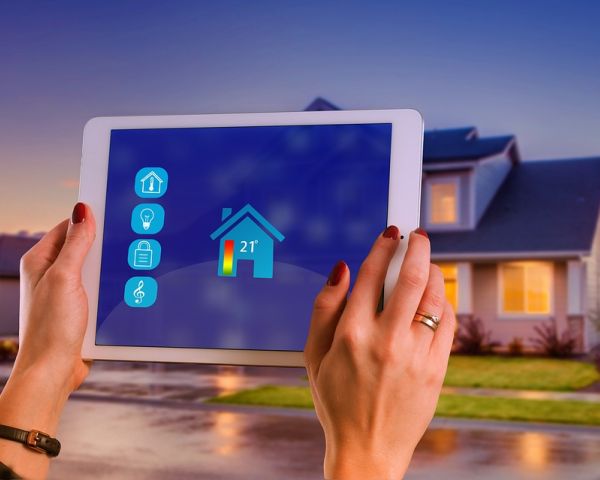
Convenience. Last but not least, a home automation system makes it easier and more intuitive to turn systems on and off. In more advanced systems with voice control capabilities, once you get used to this mode it becomes almost natural to “talk” to your smart home.
CENTRALIZED, DISTRIBUTED OR MIXED HOME AUTOMATION?
In designing a home automation home, whether it is new or under renovation, one of the decisions to be made is whether to adopt:
- A centralized system, that is, a single integrated system that manages all functions;
- A distributed home automation solution, so with independent devices that talk to each other like a computer network, or
- A mixed version with separate systems but linked to a single control system.
Let’s look at them one by one.

CENTRALIZED SYSTEM
When the systems in our home are managed by one central “brain,” then we are dealing with a centralized home automation system. A single interface takes care of the management of switches, outlets, sensors and every other smart device in the same series, a system integrated with our home.
A centralized home automation solution is also one that makes it easier to adapt to the aesthetic style of our home under renovation. In fact, since all elements are designed with the same aesthetic in mind, choosing different finishes and colors for sockets and control units in the series.
In favor of centralized home automation play the overall robustness of the system and a limited cost given by the control electronics. On the other hand, a system with a single control unit is more prone to total blockages, just as it is difficult to integrate external devices into this type of system.
DISTRIBUTED SYSTEM
Evolving over the years, home automation has moved toward new solutions that favor device flexibility. This is accomplished by creating distributed systems that see each individual device as an autonomous element capable of functioning independently of the others.
This inevitably causes an increase in the overall cost at the level of technology used, as each device must be equipped with the electronics necessary for its control and operation. It has to be said, however, that with the development of these technologies, distributed home automation has seen costs to the public significantly lowered.
Among the advantages of a decentralized home automation system we also have the increased reliability of operation. In fact, since in the event of a single device failure, the rest of the devices will continue to operate smoothly.
Another strength of a distributed solution is the ability to add devices without limitations dictated by the parent control unit.
MIXED SYSTEM
A third way of home automation is to balance centralization and distribution by separating the whole system into two parts, one centralized and one “satellite.”
The main difficulty with this mixed solution is the initial design and the need to plan the renovation in detail to avoid “holes” in the home automation system. This is why it is essential to entrust the work in your home to professionals and installers with proven qualifications who will be able to compose the ideal home automation system for you.

WHAT HOME AUTOMATION CAN DO
For each type of home system that we are going to touch with our renovation, it will be possible to make a home automation improvement. Let’s look at some examples of home automation applied to different systems in a smart home.
ELECTRICAL SYSTEM
- Home appliances, powered by smart outlets, can be turned on and off remotely or automatically under certain conditions;
- magnetic fields can be reduced in environments where people are present;
- in case of bad weather, systems will isolate themselves or go into protected mode automatically;
- some groups of devices (TV area, computer area, kitchen) can be powered on command or automatically when no one is home or when sleeping.
SMART AIR CONDITIONING
- Air conditioning units operate at different regimes depending on the presence of people;
- the humidity rate is automatically detected resulting in temperature adjustment;
- on detection of an open window, the system will turn off or adjust the air conditioner;
- Intelligent air-conditioning routines based on the habits of room occupants.
SECURITY SYSTEM
- Sensors detect gas leaks, flooding and flames, with immediate alarm even remotely;
- Automatic contact with security and emergency medical services;
- home environments always under control with security cameras also visible on smartphones;
- Cameras and intercom connected with TV in real time.
- Home automation
- Outdoor blinds raise and lower based on wind and sunshine;
- shutters and blinds talk to other systems according to predefined lighting scenarios (e.g., when I turn on the TV, the room automatically dims and the lights become dim).
THE RIGHT TIME TO INSTALL HOME AUTOMATION SYSTEM IN THE HOME
So, a well-built home automation system can really improve the quality of time spent within the home.
Installing a home automation system during renovation is undoubtedly an excellent idea. In fact, if for no other reason than to do all the work at once and take advantage of the tax breaks dedicated to energy efficiency work.
LEAVE A COMMENT
If you found the article interesting, leave a comment with your considerations about it!
Finally, if you need personalized advice on incorporating home automation principles into your home, please email [email protected]!


