
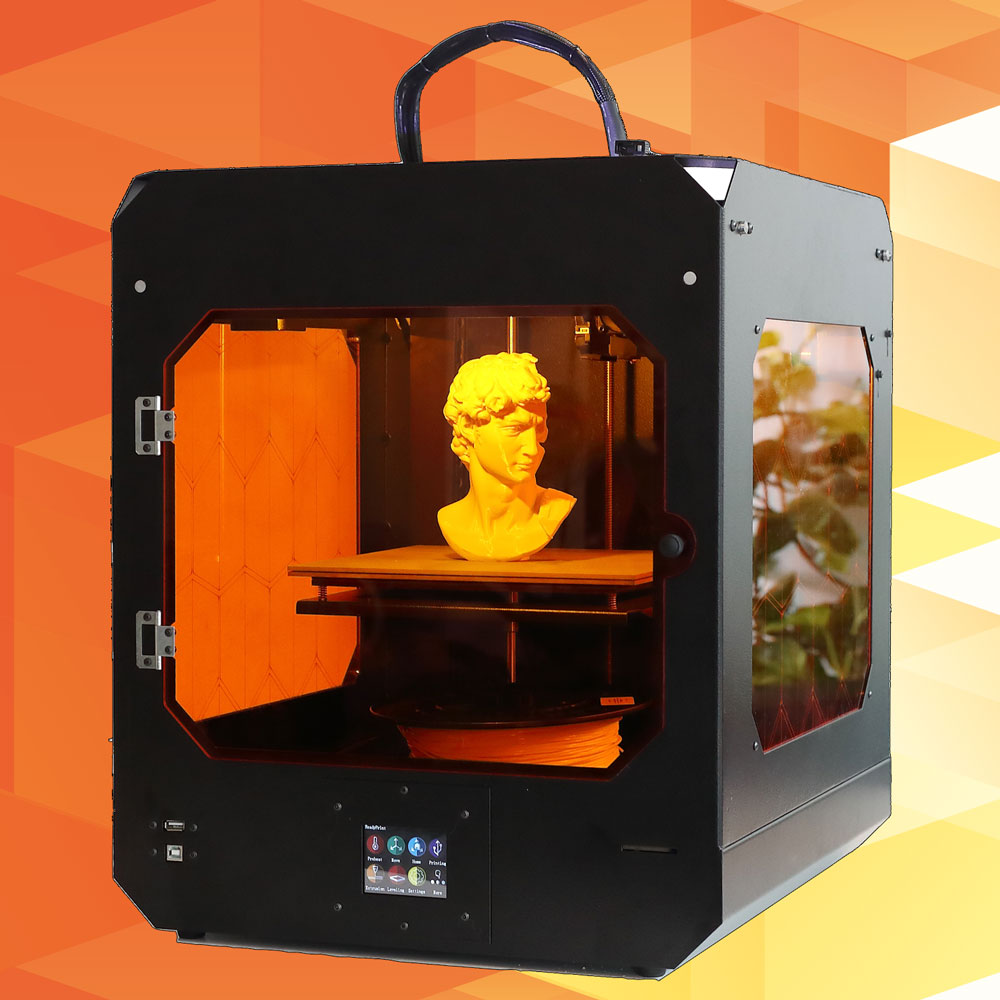
3D PRINTERS: INTRODUCTION
Furniture and 3D printers, an increasingly interesting topic. The furniture and furniture sector is one of the Made in Italy workhorses, above all in function of the value in terms of design and style that Italian companies provide to the market every year.
In addition to the moment of international caliber, the Salone del Mobile in Milan, around which the major players in the sector gravitate, there are multiple activities and events around which the advantages and potentials of an important sector for the economy of many are built districts.
Much curiosity is being created within the industry with respect to the joint use of know-how related to ‘furniture and 3D printing. In fact, new additive manufacturing technologies offer new possibilities for designers and manufacturers of furniture, furnishings, and accessories.
Recently the young Dutch designer Lilian van Daal presented the development of a new armchair that embraces research, innovation and new 3D printing production technologies.
In addition, the designer has created a new armchair from the forms found in nature that recalls the interweaving of plant fabrics, lending strength and comfort to the new seat.
The project allows us to tackle a sector that we know well in CasaOmnia: that of the creation of prototypes for furnishings and furniture. In fact, the creation of a new furniture object involves many stages of development, which can be supported using the various 3D printing techniques present.
In fact, an initial shape evaluation and assembly prototype can be produced with some of the production technologies of 3D printing, while a functional prototype will require the use of performance materials that can withstand seating tests.
3D PRINTERS: WHAT ARE THEY?
The most banal answer to the question of what 3D printers are is in consideration of the fact that “3D printing represents the natural evolution of traditional 2D printing”. In fact, they are devices capable of making any three-dimensional model through an additive manufacturing process, that is, starting from an object designed through software and replicating it in the real world with the help of special materials.
The procedure usually involves placing one layer on top of another, proceeding by cross sections. If the description is difficult to understand, think of when you want to build something with LEGO bricks: initially you lay the pieces that make up the base, then proceed upward by interlocking them so as to obtain the desired profile.
As time went on, techniques were perfected, leading to the birth of modern publishing. A true revolution, it passed through movable type machines and steam engines to inkjet cartridges and laser devices.
The next metamorphosis in the industry, actually already underway, is the advent of today’s 3D printers. Indeed, their job is no longer to imprint an image or text on a flat material, but to bring any object to life in three dimensions. No surface is created, but volume: and therein lies the revolution.
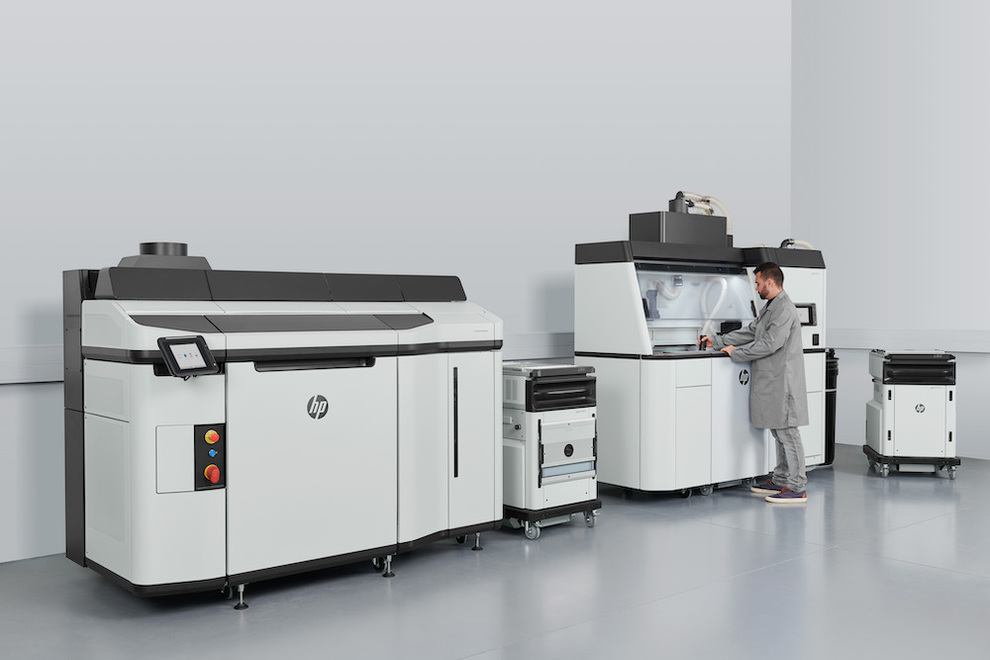
HOW DO THEY WORK?
There are different types of 3D printers. The most popular ones base their operation on the additive manufacturing process. That is, creating the object one layer at a time, starting with those below and gradually overlapping them until the entire height is covered. In this case, the process can be carried out by selective laser sintering, i.e. by heating special materials. Usually metal powders or thermoplastic substances are used and then placed in the correct position.
With fused deposition modeling, the same result is achieved, but employing a heated nozzle that raises the temperature of the material before depositing it. In this case, filaments, plastic or metal, are used, rolled onto a kind of skein that is progressively unrolled during printing.
Also used in industry is the technique of manufacturing by laminating objects, in which each layer is etched by a laser before being placed on the one below.
These are the most widely used methods in the field of 3D printers, subject to continuous evolution since the 1980s. Recently, the miniaturization of components and the need to keep costs low to facilitate their distribution have driven a simplification of the entire process.
In recent years, things have changed a bit. In fact, 3D printing is no longer exclusive to large corporations, but has reached the domestic sphere as well. To get an idea of the trend, The Pirate Bay has a section dedicated to file sharing.
Medicine is also looking at these technologies with increasing interest: the possibility of printing prostheses or even entire organs has already been discussed several times, with research also already under way on reproducing tissues and blood vessels to be implanted in patients where traditional techniques fail.
COST
The cost of early machines was prohibitive even for large companies. Now things have definitely changed, and for those who wish to purchase a 3D printer, the investment is quite low.
In fact, without mentioning one manufacturer rather than another, a simple online search is enough to find out that some models can also be purchased for less than 1,000 euros.
Obviously, those who are willing to make a larger financial outlay will be able to get their hands on printers with more advanced features and better resolution, but the assumption must be made that the market is evolving and the price is set to fall while the quality and variety of offerings are set to multiply.
MATERIALS USED
Again, the type of material used depends on the type of printer available. These are mainly thermoplastic substances and photo polymers. In laser sintering, however, compounds that have a metal base are often used, ensuring a higher strength of the final result.
The evolution of technology is rapidly leading to the introduction of new materials: including carbon fiber. A distinction must also be made between the materials marked with the abbreviation PLA and ABS: the former are derived from corn starch and therefore biodegradable, while the latter are produced from oil and when heated emit fumes that are potentially harmful to health. However, the latter are sometimes preferred because of their better resistance to mechanical stress.
The print “cartridges” are composed in most cases of filaments used for the creation of the deposit material.
Their cost is extremely varied just as an overall assessment of the printing cost is difficult. Generally speaking, it is necessary to estimate a few units of euros per cubic centimeter, but the size and complexity of the pattern can vary the final estimate dramatically.

HOW ACCURATE ARE 3D PRINTERS?
The BigRep One model is also useful for realizing how the dimensions of the printer can be both contained and generous. In this case we are talking about a machine capable of reproducing anything in the space of 1.15x1x1.19 meters, so even a small table or a small piece of furniture if necessary.
In fact, in the “resolution” item, the technical sheet reports “0,1 mm”. In other words, the printed material is true to the original design to the tenth of a millimeter, thus a quality more than sufficient for most applications, including furniture or interior design.
Finally, a more artisanal one can be added to the mechanical printing process: when the printing does not reach the desired quality level, it is possible to act on the surfaces with abrasive paper and useful treatment substances to improve the visual impact and tactile experience of the object.
3D PRINTING OF THE FUTURE
Answering this question is not easy. Certainly in the coming years, 3D printers will continue their evolutionary path, moving through more and more widespread deployment driven also by further price reductions.
Trying to imagine the time when the market will become saturated, what has already happened with the more traditional counterparts that print in two dimensions could happen: business may gradually be shifted from the sale of devices to the sale of cartridges, in this case the material used to create the models.
New printing materials will most likely be developed, and systems for selling, distributing, and exchanging 3D models for modification and fabrication will find their place. It will also be possible to further improve the software, simplifying the design phase so that it is accessible to everyone.
In fact, the bottleneck soon will no longer be in the printing of the model, but in the creation of the model itself: the specific weight of quality will have to be measured again on the creative side, as the realization will be democratically within the reach of everyone a simple click away.

3D RAPID LIQUID PRINTING
The Rapid Liquid Printing concept changes the two staples of all additive manufacturing approaches, which are the need for slicing the object to be produced (i.e., dividing it into layers to be printed one after the other) and the frequent need for support structures to be printed along with the object to support it.
Now MIT and Steelcase have developed Rapid Liquid Printing, a 3D printing system that avoids both of these issues and has already been proven in the production of furniture.
In Rapid Liquid Printing, 3D printing is done by extruding material from a nozzle, as in deposition printing, which moves inside a reservoir of gel. This has the consistency of hair gel and acts as a support for the extruded material, which therefore does not need specific support structures.
Another important element: virtually the printing area has no limits, or rather it is limited only by the size of the gel tank in which the nozzle moves.
This makes it possible to create large objects. In addition, according to MIT and Steelcase, Rapid Liquid Printing is a much faster process than other additive techniques.
Although in some ways Rapid Liquid Printing is reminiscent of polymer lithography, the extruded material sets by chemical reaction and not by the action of light or a laser beam. The system makes it possible to use materials such as rubbers, plastics and polyurethanes that come out of the nozzle somewhat like toothpaste from a tube.
It is also possible to use two materials at the same time, which upon exiting the extruder chemically combine with each other.

CONCLUSIONS
The designers of furniture and furnishings are among the main users of 3D printers, which allow you to create objects with complex shapes without limits to their creativity.
Digital technologies are powerful tools in the service of designers’ creativity, as they offer the opportunity to spend more time on the creative process and to experiment with more solutions due to the speed and efficiency of the prototyping process, with the ability to present a finished, functional product to their clients.
In fact, with 3D printing, designers can easily create prototypes to test and refine their creations before they go into production. Moreover, with 3D printing, objects can be made that cannot be produced by any other technique.
Since 3D printing is particularly advantageous in the production of unique objects or in small series, it lends itself optimally to improving the competitiveness of many typical Made in Italy companies that produce valuable objects of craftsmanship, such as, design objects, furnishing complements and models or parts of furniture, up to whole pieces of furniture. Chairs, armchairs and lamps are among the most produced items.
Here, therefore, 3D printing could soon reveal a two-faced nature: on the one hand, guaranteeing great freedom to independent designers who could move from concept to manufacture in almost real time, on the other, canceling entire production districts together with their manufacturing knowledge.
Another possible problem arises from copyright protection: if today reproducing a conforming copy of an object requires a production facility of a certain size tomorrow anyone with a geometric model of a product, perhaps downloaded from the Internet, and a 3D printer could “pirate” an object and produce it themselves, be it a lamp or a weapon.

LEAVE A COMMENT
This article aims to inform about the evolution and development of 3D printing technology and its various applications. If you intend to learn more or have doubts about its use and application possibilities, do not hesitate to leave a comment at the end of the article, we will reply as soon as possible!


