Knowing how many watts it takes to heat a room is critical to properly choosing radiators, radiator fittings, or towel warmers. Incorrect sizing can compromise comfort, consumption, and the aesthetic performance of the room.
In this guide, we explain how to calculate heat demand quickly and easily so that you can choose the right radiator for your needs.
Whether you are choosing a designer radiator for the living room or a towel warmer for the bathroom, knowing the heat requirement allows you to avoid sizing errors and optimize consumption and comfort.
How is the heat demand of a room calculated?

When we have to buy a radiator or a radiator, the first question is always the same: how many watts do I really need?
Heat demand is calculated with a simple formula, which is also used by installers:
Formula for calculating heat demand
MC × CT = Watt
Where:
- MC = Cubic Meters of the room
- CT = Thermal Coefficient of Climate Zone.
The result will be expressed in watts, which is the power needed to heat the room properly.

Let’s analyze the formula
Calculation of Cubic Meters (MC)
To calculate the volume of the room we use the formula:
Length × Width × Height = Cubic Meters
Practical example:
- Length: 5.00 m
- Width: 4.00 m
- Height: 3.00 m
5 × 4 × 3 = 60 cubic meters
We then obtained the first value:
MC = 60
Thermal Coefficient (CT): what does it mean?
The Thermal Coefficient represents the amount of energy required to heat each cubic meter of the room.
In Italy it generally varies between:
- 27 (warmer climate zones)
- 42 (colder climate zones)
For example:
Thermal Coefficient = 32
Distribution of Climate Zones over the Italian territory

Full calculation example
We resume the formula:
MC × CT = Watt
If:
- MC = 60
- CT = 32
60 × 32 = 1920 watts
This means that to properly heat that room you will need a radiator or radiator with a heat output of 1920 watts or slightly more.
How many watts are needed per square meter?
Many users search, “how many watts per square meter do you need?”
Indicatively:
- 70 – 90 Watts/sq m in mild areas
- 100 – 120 watts/sq m in colder areas
⚠️ Warning: this is a guideline value.
The most accurate method is still the calculation by cubic meters and heat coefficient.
This value is useful for a quick estimate, but for rooms with high ceilings, large glass areas, or dated insulation, it is always advisable to calculate the actual cubic meters of the room to avoid undersizing.
Many purchasing errors stem precisely from a rough calculation: an undersized radiator will fail to reach the desired temperature, while a correctly sized one will work more efficiently and stably.
Factors influencing heat demand
The MC × CT calculation is reliable, but some elements may change the result:
- Building insulation
- Presence of thermal coat
- Type of fixtures
- Room exposure
- Ceiling height
- Low or high temperature system
With modern insulation, the actual requirement may be less. In older dwellings, however, slight oversizing may be necessary.
How to use data to choose the right radiator
Once the required watts have been calculated, they need to be compared with the heat output given in the product data sheet.
Each radiator or radiator reports:
- Power in Watts
- Dimensions
- Yield according to the chosen configuration
Simply identify the pattern that reaches or exceeds the calculated value.

Watts and Kcal: how to convert
Some companies report the yield in Kcal instead of Watts.
The conversion is simple:
1 Watt = 0.86 Kcal
Example:
1920 Watt × 0.86 = 1651.2 Kcal
This way you can easily compare technical values.
Which radiator to choose after calculation?
Now that you know your heating requirements, you can make a more informed choice between:
- Vertical and horizontal radiators
- Bathroom towel warmer
- Electric radiators
- Design solutions for modern environments
At CasaOmnia you will find a selection of high-performance thermo-furnaces, suitable for both modern homes and renovations.
👉 Scopri la collezione di termoarredi su CasaOmnia
Prodotti per categoria
-

Graziano Apside D Tubular Decorative Heater
Price range: € 214,24 through € 2.282,80 VAT included -
Graziano Diapason Double radiator (H 2000 x W 186 mm. – VA2/VA3 – White 9016)
Original price was: € 356,16.€ 178,08Current price is: € 178,08. VAT included -

Heater Torri Brem
Price range: € 1.060,50 through € 2.619,75 VAT included

👉 Esplora gli scaldasalviette per il bagno
Prodotti per categoria
-
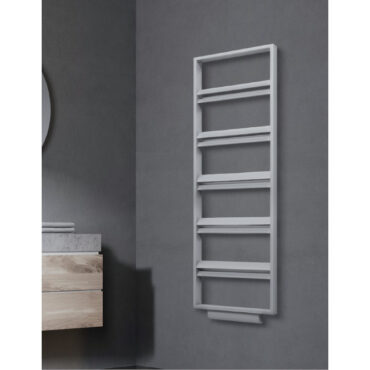
Alis Brem towel warmer
Price range: € 799,00 through € 1.243,20 VAT included -

Asym Brem towel warmer
Price range: € 814,80 through € 1.234,80 VAT included -
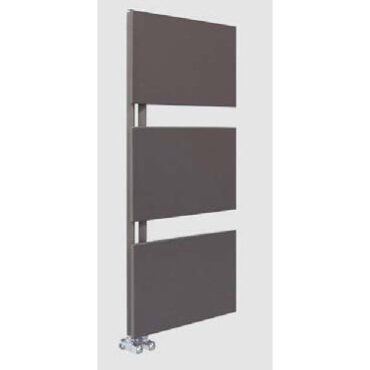
Asymp Brem towel warmer
Price range: € 973,35 through € 1.433,25 VAT included
👉 Valuta i termoarredi elettrici per installazioni rapide
Prodotti per categoria
-
100 Righe Electric Plate Radiator Caleido
Price range: € 2.063,00 through € 2.762,00 VAT included -
Bent Electric Plate Radiator Caleido
Price range: € 1.654,00 through € 3.124,00 VAT included -
Caleido Electric Air Plate Radiator
Price range: € 2.688,00 through € 4.074,00 VAT included


Sovradimensionare o sottodimensionare il termosifone?
- Un termosifone sottodimensionato lavorerà sempre al massimo consumando di più.
- Un termosifone leggermente sovradimensionato garantisce comfort stabile e minori sbalzi termici.
In fase di scelta è consigliabile mantenere un margine di sicurezza del 5–10% rispetto al valore calcolato.
Conclusione
Calcolare correttamente il fabbisogno termico significa evitare errori di acquisto e garantire comfort, efficienza e durata dell’impianto nel tempo.
Un termoarredo ben dimensionato non è solo una fonte di calore, ma un elemento d’arredo capace di valorizzare l’ambiente.
Se desideri un supporto nella scelta del modello più adatto in base alla tua zona climatica, alla metratura e al tipo di impianto, il team CasaOmnia può aiutarti a individuare la soluzione più efficiente e coerente con il tuo progetto d’arredo.