
CEMENT: INTRODUCTION
In some villas, concrete was used to create external furnishings to replace the classic furniture.
Tables, seats, benches, alcoves used as storage shelves or open display cases were the most commonly used additions.
Recently, this material, thanks to constant research and experimentation, has reached levels of quality and workmanship that have made it suitable for use in interior design.
Thanks to the work of architects and designers, this material is used to create elegant, durable and functional furniture, flooring and accessories.
Indoor and outdoor spaces today have a unique common denominator because no single material lends itself to the endless realizations allowed by concrete.
We start from the coverings such as floors and vertical surfaces of our homes where this material is a valid alternative to marble, parquet, stoneware and resins.
Initially, this solution was adopted in industrial settings while now it is also used for private construction, becoming a raw material for creating striking surfaces.
In addition, concrete was the symbolic element of twentieth century architecture, from “rough” material it becomes “light” with the addition of sand and glass fibers.
In fact, this allows its use to produce furnishing accessories such as tables, seats, consoles and small objects such as vases, lamps and various objects.
It is a solid and durable material that is at the same time pliable and customizable with the addition of metal powders or paste coloring, although the raw “unfinished” appearance adds to the appeal of certain furnishings.
Concrete adapts to all types of interiors and styles due to its multiple qualities. In fact, it is a hard, dense and durable material but also flexible by taking the shape, color and appearance we desire.
As a matter of fact, with this material it is possible to make relief designs recreating the leather or ceramic effect, plus it is extremly bright and able to make a room “warm”.
CHARACTERISTICS
In construction, the term concrete, or more properly the hydraulic one, refers to a variety of building materials, known as hydraulic binders, which mixed with water develop adhesive properties.
Cement paste or grout, cement plus water, is used as a binder mixed with inert materials such as sand, gravel or crushed stone.
- in the case where cement paste mixes with a fine aggregate (sand) you have cement mortar;
- If aggregates of different sizes are combined with the cement paste, on the other hand, concrete is obtained;
- in the case where concrete is coupled with a reinforcement consisting of steel rods, appropriately placed, reinforced concrete occurs.
Germany was the first producer in Europe in 2014 (the second was Italy). In addition, an estimated 36 million tons of cement was produced in 2009, or about 601 kg per capita. Finally, world production in 2008 was 2.83 billion tons, or about 450 kg per capita

ADVANTAGES
Concrete is a material that has many advantages. First and foremost is its affordability, especially when compared with marble and granite.
In fact, cement has a very low base cost that makes it appreciable first and foremost by the end customer but also by the entire supply chain from conception to product realization.
The environment also benefits from the use of concrete in home furnishings, just imagine the countless number of trees that are saved.
Concrete can be molded into any shape, curved and rounded better than any other material, can take on any color.
In addition, combined with mortar, sand, glass fibers and other additive materials, it can be used for interiors or exteriors when treated with additive agents.
So thanks to concrete, you can create a polished floor or one with special effects. In addition, bathroom fixtures, kitchen cabinets, chandeliers and any other furniture materials can be made.
So, nothing is impossible to achieve through the use of concrete.
FURNITURES
The trend towards the use of concrete is widely disclosed by professionals, architects, design, companies in the sector and by specialized magazines.
Just browse through one, in fact, and you will find many new ideas for elegantly, comfortably and modernly furnishing any indoor or outdoor environment with concrete achievements.
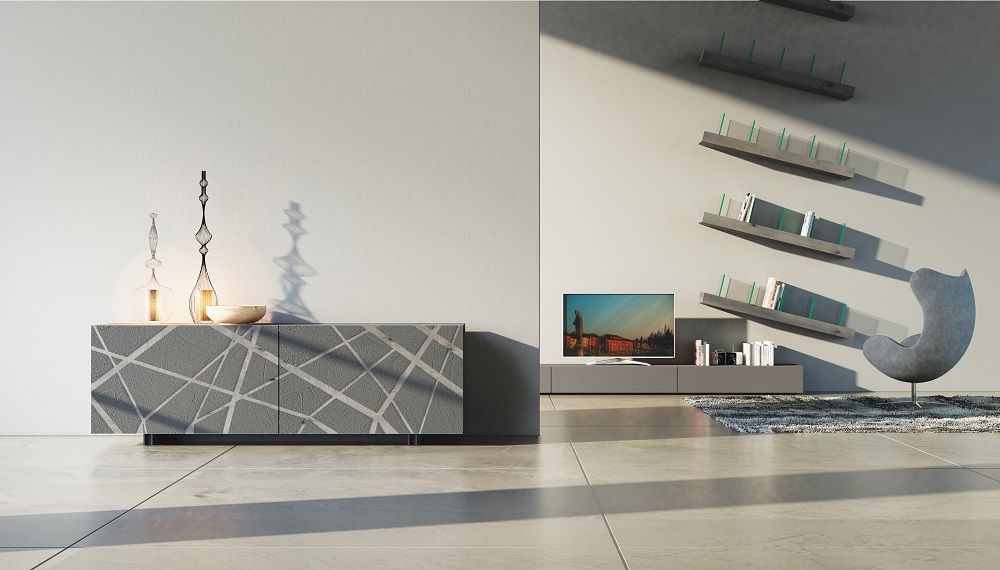
Tables with concrete bases or feet, chairs, armchairs, sideboards, kitchens, bookcases.
Finally, the imagination of designs has found thanks to concrete the opportunity to give free rein to the imagination by creating furniture that can be made by skilled workers directly inside the home, adapted to the measurements of the room or the needs of customers.

FURNISHING
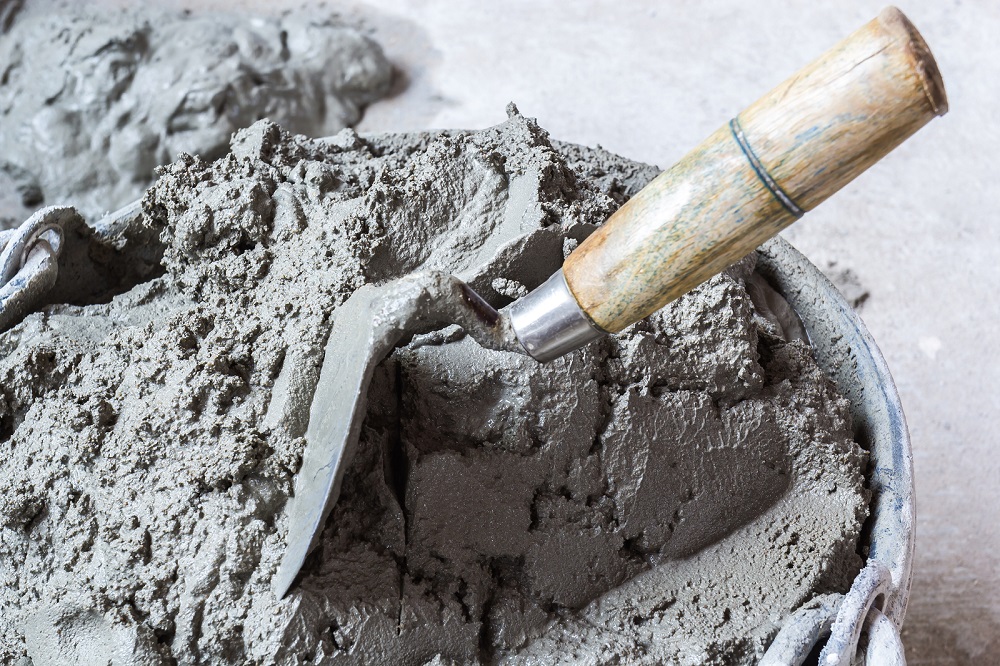
Of course, when it comes to furniture concrete, one should not imagine the classic bag of raw concrete with which the bricklayer pulls on a wall or repairs a hole in the cellar.
In fact, the material used for the creation of concrete furniture and accessories is a much more refined product, the result of years of laboratory experiments and tests to verify its consistency, durability and effectiveness over time.
The use of concrete in furniture has changed the way we see the home and has allowed us to give free rein to the imagination and creativity within each of us.
The use of concrete in interior design is still not seen by all people as the true alternative of the modern era to furnish and beautify their homes.
With concrete furniture and accessories, the time spent on maintenance is also greatly reduced because the surfaces are not attacked by external agents as is the case with classic wooden furniture.
The uniqueness of the product makes the environment more personalized because in most cases these are works made on the basis of specific customer requirements.
CONCLUSIONS
Cement has long been the undisputed ruler of industrial design.
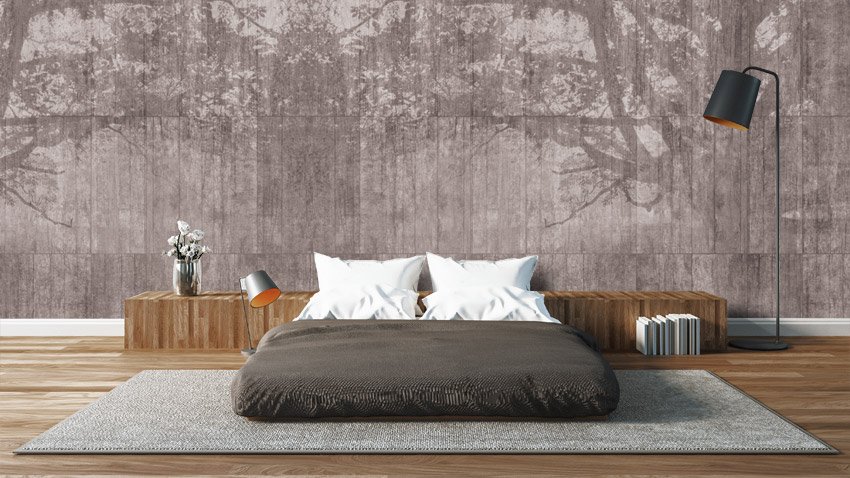
In fact, uncoated rough surfaces combined with chrome metal, black and gray tones, and suspended elements are the perfect embodiment of this style.
However, the fluidity of polished concrete allows for smooth and uniform trendy surfaces that now easily find their place in modern, concrete and sober designs.
In addition, combined with 1940s and 1950s furniture it also finds its place in a period decor.
Finally, the purity of concrete, its raw character and ability to combine with natural materials.
Wood, leather, marble, and natural fibers such as linen, cotton, and wool will blend perfectly with the sobriety of concrete. It is an equally “good” mix in a Scandinavian or rustic interior.
LEAVE A COMMENT
If you found the article interesting, do not hesitate to leave a comment with your considerations!
Finally, if you need a personalized guide to choose with care and awareness how to use cement for your furniture, send an email to [email protected]!


