
PHOTOVOLTAIC SHINGLES: INTRODUCTION
The installation of photovoltaic tiles on one’s roof is increasingly popular. The reason lies both in seeking savings over time and in being sure of using energy from renewable sources.
The desire to self-generate electricity has led to the increasing development of photovoltaic energy. In order to build your own photovoltaic system, you need to install the classic solar panels on the roof or in an area adjacent to your home.
However, these, although very simple in structure, do not present a winning aesthetic. Those who pay attention to the aesthetic impact of the roof can therefore opt for photovoltaic tiles, which are equally efficient but less aesthetically invasive.
From a technical point of view, the photovoltaic tiles have a high resistance to temperature changes and atmospheric agents thus ensuring a very long time duration. In addition, thanks to continuous technological research in the field, photovoltaic tiles have achieved a high degree of efficiency that allows for very easy installation.
In order to install a PV system involving shingles, it is also necessary to provide for the replacement of old shingles. It should also be emphasized that, unlike the panels, the possibility of angle of the tiles is less. In fact, to make the most of the energy from the sun, therefore, it is necessary to install the tiles with the utmost precision.
CHARACTERISTICS
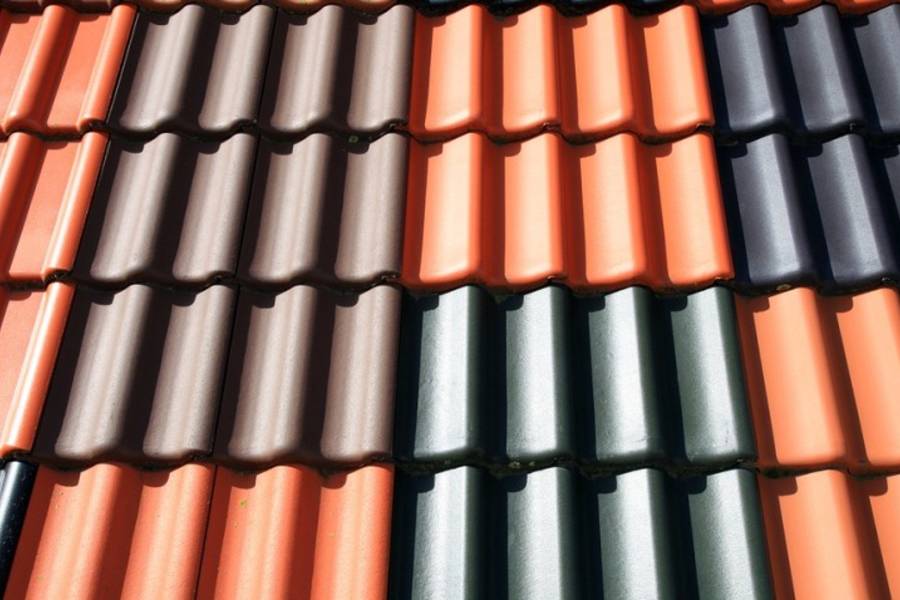
Aesthetically, the photovoltaic tile is similar to an ordinary tile, usually also in material and color. The peculiarity lies in the fact of integrating a photovoltaic cell with the function of producing electricity to the usual ceramic base support.
Individual tiles are connected together in series to form a photovoltaic system, with the peculiarity of being fully incorporated into the roof of the building. Solar shingles are suitable for any type of traditional roof with a pitch from 5 to 60 degrees.

TYPES
There are various types of photovoltaic roof tiles. In this regard, let’s take a look at all the types on the market.
Photovoltaic solar cell tiles: small photovoltaic panels are inserted inside the terracotta tile which are usually protected by glass to guarantee resistance to atmospheric agents, impacts and foot traffic. The solar cell photovoltaic tile is inexpensive and is the most popular solution for those who choose to produce clean electricity. In fact, the support base for photovoltaics is almost always made of classic Marseille or Portuguese roof tiles.
Photovoltaic tiles with solar tiles: terracotta tiles, have a curved or tile shape, while the upper part of the surface is covered with flexible sheets of amorphous silicon.
Transparent photovoltaic tiles: they are tiles made of polycarbonate, PVC or glass. These are all materials composed of organic salts that allow up to 90 percent of the light impinging on them to pass through. Transparent photovoltaic tiles absorb radiation in the ultraviolet and infrared frequencies. In addition, through this, the captured light is transferred to the edge of the tile where there is a thin strip of photovoltaic material ready to convert it into electricity. This type of tile yields much less than other types, but on the other hand can boast of the excellent resistance of the materials to weathering.
Solar thermal roof tiles: a separate discussion must be made regarding this type of roof tiles. These are in fact tiles normally made of brick and designed to produce domestic hot water. The panels contained in the tiles are provided with a copper manifold and vacuum tubes. The system must include the installation of thermal tanks to store hot water, which can be used for any heating system. The visual impact again remains practically nil.
SELECTION CRITERIA
As was the case with solar panels, different models and types can be selected in the case of photovoltaic tiles. At the moment, the photovoltaic market has two different types of solar roof tiles, the classic ones and the roof tiles. Both are definitely better than panels in terms of aesthetic performance.
But what happens from the point of view of costs and efficiency? If expenses are taken into consideration, classic tiles also present a greater convenience because their installation is faster and cheaper.
PV shingles, in fact, are either to be inserted between one tile and another or to be applied over the flat part of the pre-existing tile. This means that it is not always necessary to carry out a complete replacement of roof tiles, unless elements are broken.
In addition, photovoltaic roof tiles can be of various types, shapes, and colors, in order to best blend in with the roof on which they are to be placed. Tiles can be considered the evolution of roof tiles, as they ensure total camouflage of the small panels that are installed, integrating completely with the property.
In fact, the special shape of the roof tiles conceals the presence of the panels from view, making them completely invisible. This solution therefore becomes the perfect choice for those who live in areas subject to landscape constraints that deny the possibility of installing solar panels.
In addition, roof tiles cost more than classic tiles but, at the same time, are easier to install. The only criticism that can be made of this type of choice is that the particular curved shape of the tile itself does not ensure maximum efficiency.

MATERIALS
When deciding to opt for a photovoltaic system, it is always important to remember that the choice of shape must be accompanied by that of the materials. The photovoltaic tiles, in fact, can be made of natural materials, such as clay or they can be made of plastic materials.
In both cases, it is essential to evaluate the type of material because this is closely related to the performance of the tile over time. In fact, tiles of average workmanship may not ensure perfect weathering resistance, creating damage even to the solar panel.
Furthermore, when choosing the installation of photovoltaic tiles or slates, it is essential to select models that allow the replacement of the panel. In this way, if the panel breaks down or becomes less efficient over time, it can be changed without installing new tiles.
ADVANTAGES AND DISADVANTAGES
Installing photovoltaic tiles on your home certainly has positive aspects.
The advantages of installing solar shingles are:
- Adaptation and conformation to the surrounding environment;
- No negative aesthetic impact;
- Obtaining photovoltaic clearance in valuable areas;
- Lower consumption of electricity from fossil fuels;
- Savings over time by disconnecting from the traditional power grid;
- Less polluting impact on the environment;
- A photovoltaic output of about 50 watts per tile.
Despite the different advantages of photovoltaic tiles, it is also necessary to know what the cons of this choice are.
Surely one of the best known disadvantages is the excessive cost compared to traditional photovoltaic panels, which are increasingly chosen in our country. Solar shingles are cost prohibitive, and very few can afford to install them on their roofs.
The efficiency of photovoltaic tiles is another disadvantage to consider. In that it takes many solar tiles to be able to match the performance of a single PV panel. So in terms of convenience, if you do not have problems with the clearance to install the panels, it is better to opt for the latter.
These are less durable, and need more maintenance over time, especially if they are subjected to weather and other weather-related problems for long periods.
Finally, it must be considered that while the installation of these is fairly simple, the cleaning operations are not! Another small disadvantage of which it is necessary to take into account before purchase.

COSTS
How much do solar roof tiles cost? To be able to have the same energy as a photovoltaic roof, there is a need to tile the entire terrace or sloping roof with solar tiles.
The raw materials that are used in the production of solar tiles are expensive, which is why the final price of them is also prohibitive. At the moment a single tile has a cost between 50 and 100 euros, depending on the model you choose.
At least 500 solar tiles are needed to be able to cover an entire canopy or terrace. This means that a system with photovoltaic tiles costs between 25 thousand euros up to 50 thousand euros. Not to mention the costs involved in installing them on the roof.
So at present, the costs of photovoltaic roof tiles are at best prohibitive and affordable only to those with capital for the investment.

LEAVE A COMMENT
If you found the article interesting, leave a comment with your considerations on it.
Finally, if you need a personalized consultation for the choice and installation of your photovoltaic tiles, send an email to [email protected]!


