
ORIENTAL STYLE: INTRODUCTION
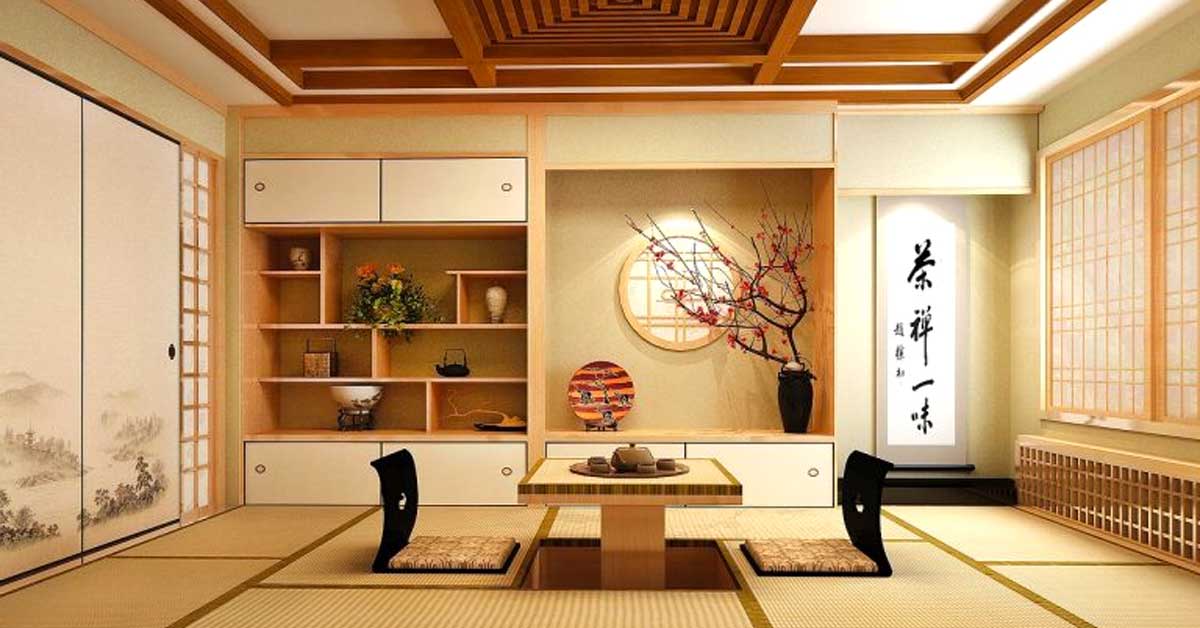
The oriental furnishing style is not unique and homogeneous, as what we Westerners have obtained from the East mixes different traditions and philosophies together. In fact, the oriental style includes Chinese Feng Shui philosophy, Japanese Zen philosophy and “oriental minimalism”.
In addition, several distinguishing features of the various styles come together to give an exotic and spiritual touch to the home.
Furnishing a house in oriental style means giving it a very precise and defined character. In fact, the house thus becomes not only an expression of taste and personality, but also a conduit of the soul and spirit to nature.
Moreover, the Oriental style aims for a balance that is not only outward but is also consequently inward.
In fact, the urge and desire to discover faraway places of the world is an increasingly popular trend in the modern world. The philosophies and way of life of a part of the globe ideally matches the increasingly popular trend of furnishing homes in an oriental style.
And, in addition, the Far East is defined as the entire area including the nations of Asia such as China, Japan, South Korea, Thailand and Burma.
The whole thus connotes, in an elegant fusion of styles vaguely exotic and ethnic in character, a relaxing home environment with a spiritual flavor.
CHARACTERISTICS
The furnishing style generally recognized as “oriental” is, as mentioned, a set of styles that in Eastern countries are quite distinct from each other. Among the styles included in the one commonly called oriental, there are the Japanese style, the Zen style, the oriental minimalism, the Feng Shui, the Chinese style.
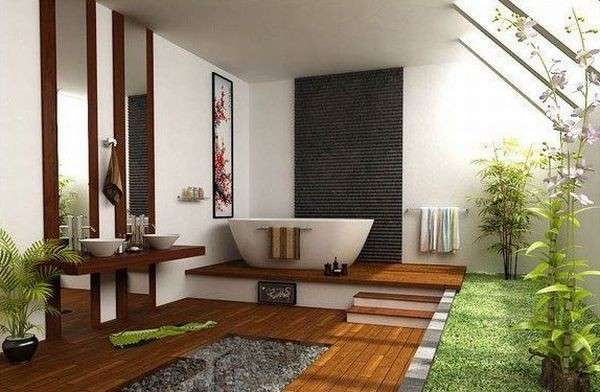
The elements that unite these styles are the materials used and the philosophy that dictates the rules. A philosophy, this one, devoted to the well-being of body and mind, to their beneficial relationship with nature, to the essentiality of furniture, to balance and, above all, to order.
In addition, the visual impact should be harmonious, calm, pleasant, but never aggressive. In fact, functionality is given by the search for essentiality, by the presence of a few elements that are easy to fix and keep in order.
Finally, the distinctive features of the Oriental style can be recognized aesthetically by the colors used, the natural materials, the location of the furniture, and the shapes of the furniture.
DISTINCTIVE FEATURES
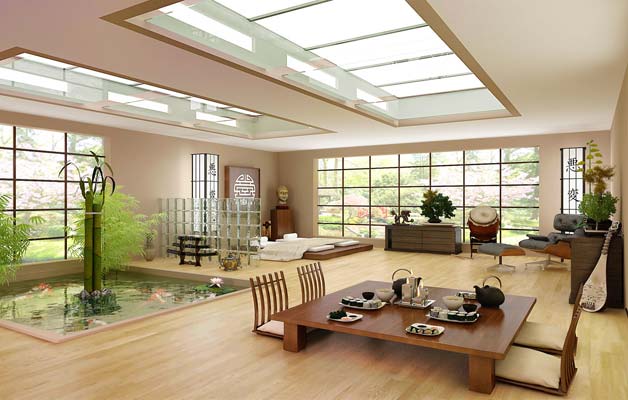
The oriental style can be distinguished by the presence of some particular distinctive features:
- use of natural materials, such as wood and paper;
- Presence of soft lights, from mood lamps and/or candles;
- Presence of fragrant essences and/or incense;
- Use of sliding doors;
- floor-living trend. In fact, floor-living is characterized by futon beds on tatami mats, low tables with cushions as seats, testifying to the philosophy of the style, tending toward essentiality;
- I sometimes use colored lacquers, from the Chinese tradition;
- Use of colors suitable for various room functions;
- position of furnishings according to philosophical and spiritual beliefs. In fact, Feng Shui teaches that harmony with nature also means taking into account the four cardinal points, the presence of light and wind in the home;
- extensive use of textiles. In fact, they not only create relaxing atmospheres, but also make it possible to renovate the house without changing furnishings and furniture, the position of which remains crucial in this style.
EXAMPLES
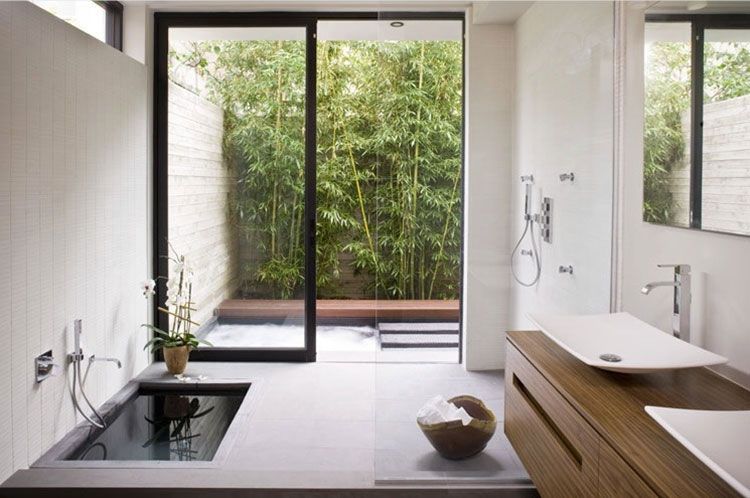
A very characteristic room in the oriental furnishing style is the bedroom: floor covered with tatami and futon mattresses placed on top, to be rolled up and stored during the day, or beds with a very low structure and padded headboards, lined with fabric, hung on sticks nailed to the wall.
The presence of sliding doors between rooms is another evocation of the oriental style. The use of low tables for dining, the presence of cushions on the floor as seats instead of chairs, are also other characteristic elements of this style.

So, we can certainly say that The hallmarks of the Oriental style are a harmonious, calm visual impact, due to the special care in theuse of colors, the exclusive use of natural materials and the few pieces of furniture with simple shapes positioned according to precise rules . According to the Feng shui discipline, the ideal design of dwellings is one made with the presence of magnetic and energy fields in mind. Thus it is possible to create dwellings whose interior is in harmony with the exterior.

WHERE TO PLACE THE FURNITURE
As mentioned, furniture in the oriental style tends to be placed downwards, so on the floor. But that’s not all: the orientation of the furniture itself is also important for oriental philosophy and well-being in harmony with nature. For example, the bed should face north, and the front door should never face another door to the outside, so that the life force entering the house does not immediately slip out.
Furnishings in the middle of the room are not recommended: especially the chairs should be placed along the walls.
MATERIALS
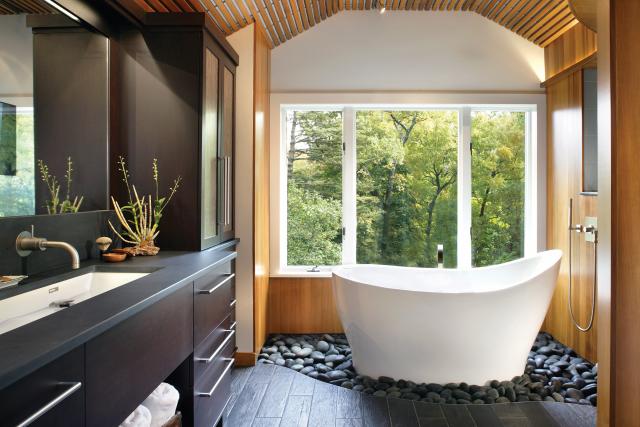
For furniture and upholstery, the oriental style uses mainly natural materials. For example, the interior doors in the Japanese style are the “fusuma” the typical sliding doors made of paper “shoji“.
For the rest, the most commonly used material, both for cladding and for furniture, is wood, especially in light-coloured woods, in any case of oriental origin. Bamboo is another popular material used for certain types of furniture: light, durable and natural.
The use of sliding paper partitions in Japanese style, separates the rooms giving them a great brightness, but heating a house equipped with paper partitions is difficult: such environments will be cold during the bad season.
Another material that must be used in the home according to Feng Shui philosophy to balance the presence of wood is metal. The fabrics, widely used in this style, can be light like organza, or crinkled, shiny and pleated, or they can be drapes of silk.

COLORS
The furniture of the oriental style have defined shapes, more often square, devoted to minimalism and essentiality, but as far as possible without sharp edges. No decoration is allowed on the furniture and walls, except those consisting naturally of fabrics. The decorations are only present in Chinese furniture of the period, where coloured lacquering was also common. The “floor” tendency means that the essential, simple forms of oriental furnishings are developed horizontally, in any case downwards, and almost never vertically.
Zen tradition and above all Feng Shui dictate the rules regarding the colours of this style. According to Feng Shui every colour has a precise meaning and must be associated with particular activities.
Instead, the Zen tradition, in accordance with minimalism, would tend toward the almost exclusive use of neutral and/or muted colors.
Feng Shui, on the other hand, also recommends the use of bright colours, such as red or yellow-gold, which are auspicious and suitable for characterizing a room that overlooks an unpleasant landscape. Feng Shui also recommends the use of soft colors for small rooms, where there is already a lack of space.
Green and brown are other contemplated colours: brown is the colour of earth and wood and therefore of nature, as well as green, which also symbolizes rebirth.
Blue is the color of study and relaxation, therefore also suitable for the sleeping area, while pink is the color of love.
Strangely enough, Feng Shui also contemplates the use of black, considered the summa of all colours; be careful, however, because in some cases it could be a bad omen.
LEAVE A COMMENT
If you found the article interesting, leave a comment with your considerations on it.
Finally, if you need personalized advice on how to insert the oriental style into your home, send an email to [email protected]!


